What Is a Fleet Fuel Consumption Dashboard System?
A fleet fuel consumption dashboard system is a reporting and monitoring workflow that helps businesses understand how fuel is used across vehicles, trips, drivers, routes, and operating periods.
The keyword fleet fuel consumption dashboard system refers to a system that helps logistics and transport teams review fuel usage in relation to daily fleet operations.
For trucking companies, container transport operators, delivery fleets, and businesses with internal vehicles, fuel consumption is not only a finance number. It is connected to route planning, trip execution, driver behavior, vehicle condition, waiting time, idle time, maintenance signals, cost trends, and operational reporting.
Why Fuel Consumption Needs Operational Context
Fuel consumption needs operational context because a fuel bill alone does not explain why fuel cost is high.
A vehicle may consume more fuel because the route is not planned well. A driver may spend too much time idling. A truck may wait too long at a warehouse, port, depot, or customer site. A vehicle may need inspection. A trip may be delayed and require extra movement.
A useful dashboard system should help teams see where fuel cost comes from and which operational pattern needs attention.
Why Logistics Businesses Need a Fuel Consumption Dashboard
Logistics businesses need a fuel consumption dashboard because fuel cost can become difficult to control when fleet activity grows.
When fuel data is tracked manually, management may only see total fuel spend at the end of the week or month. By then, the business may not know whether the issue came from a driver, vehicle, route, customer site, waiting time, or repeated planning problem.
Common Problems Without Fuel Visibility
The first problem is unclear fuel usage by vehicle. Management may know total fuel cost, but not which vehicles are consuming more than expected.
The second problem is weak driver behavior visibility. Fuel usage may be affected by idling, repeated detours, harsh driving patterns, or poor trip execution.
The third problem is poor connection between fuel and trip data. A trip may be completed, but the actual cost may be higher because of route changes, waiting time, extra movement, or customer site delays.
The fourth problem is late maintenance signals. A vehicle with abnormal fuel consumption may need inspection, but the issue may not be noticed early enough.
The fifth problem is manual reporting. If reports are prepared manually, management may not see fuel patterns by driver, vehicle, route, customer, time period, or business unit.
What Management Needs to See
Management needs to see fuel usage by vehicle, driver, trip, route, customer, time period, waiting time, idle time, maintenance signal, cost trend, and exception report.
This helps COOs review fleet performance and helps CFOs understand fuel-related cost risk earlier.
What Should a Fleet Fuel Consumption Dashboard System Show?
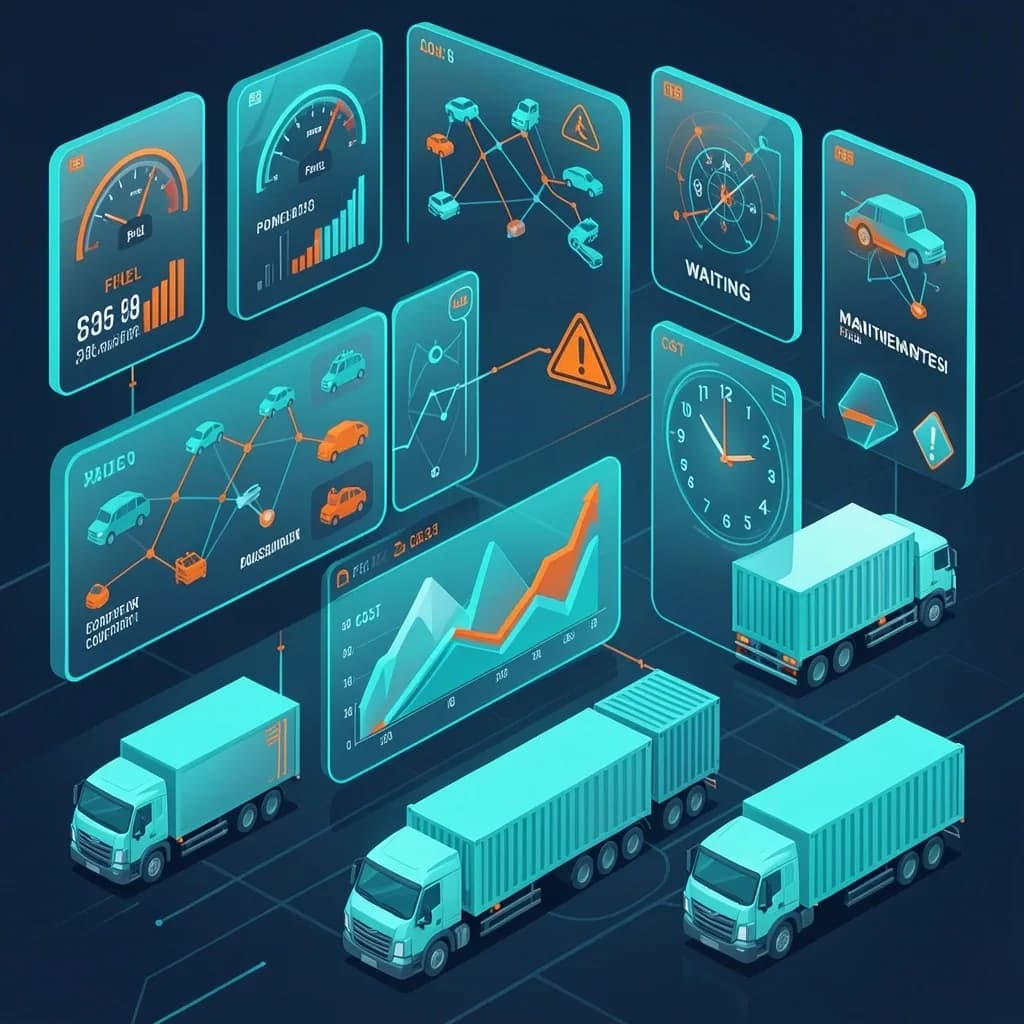
A fleet fuel consumption dashboard system should show fuel usage, trip performance, driver behavior, vehicle efficiency, waiting time, maintenance signals, cost trends, and reports.
The dashboard should help the team answer one question: where is fuel being used inefficiently?
Fuel Usage by Vehicle and Trip
Fuel usage by vehicle and trip helps the team understand which vehicle or trip is creating higher fuel cost.
This may include vehicle ID, trip reference, route, distance, fuel used, fuel cost, trip status, waiting time, and exception notes.
When fuel data is connected with trip data, operations can understand whether the issue comes from the vehicle, route, driver, customer site, or planning process.
Driver Behavior and Waiting Time
Driver behavior and waiting time are important because they can affect fuel usage directly.
A truck may spend too much time idling. A driver may take a longer route. A vehicle may wait at a depot, port, warehouse, or customer site. These situations may not look serious on one trip, but they can create large fuel cost over time.
A dashboard helps teams identify repeated patterns instead of treating each case as isolated.
Vehicle Efficiency and Maintenance Signals
Vehicle efficiency and maintenance signals help the fleet team detect unusual consumption.
If one vehicle consistently uses more fuel than similar vehicles on similar routes, the business may need to check maintenance, tire condition, load pattern, or driver behavior.
This helps reduce unnecessary fuel waste and supports more proactive fleet management.
Cost Trend and Reporting
Cost trend and reporting help management review fuel cost over time.
This may include fuel cost by day, week, month, vehicle, driver, route, customer, or business unit.
A useful report helps finance and operations discuss cost based on data instead of assumptions.
How Apollogix Supports Fleet Fuel Consumption Dashboard Workflows
Apollogix supports fleet fuel consumption dashboard workflows by connecting transport jobs, trips, drivers, vehicles, equipment, waiting time, proof of delivery, accounting, dashboard, and reporting through TMS.
TMS means Transportation Management System. In Apollogix TMS, transport companies can manage transport jobs, containers, trips, drivers, vehicles, trailers, equipment status, waiting time, proof of delivery, customer tariffs, client rates, transport quotations, accounting, reports, administration, and system settings.
The dashboard can show Jobs, Containers, Trips, Drivers, Equipment, Waiting Time, Trip Summary, and Container Demurrage Summary. These views help management connect transport activity with cost, service quality, and operational reporting.
How This Helps Operations
Operations teams can review fuel-related signals together with trip status, route, driver allocation, vehicle usage, waiting time, and delivery progress.
This helps the team identify where fuel cost may be caused by planning issues, long waiting time, extra trips, or repeated exceptions.
How This Helps Fleet and Maintenance Teams
Fleet and maintenance teams can use fuel patterns to identify vehicles that may need inspection.
If a vehicle shows abnormal consumption, the team can review equipment status, maintenance history, trip pattern, and driver allocation.
This helps the business act earlier instead of waiting for a breakdown or a large monthly cost report.
How This Helps CFOs and COOs
COOs can use dashboard data to review fleet performance, driver behavior, trip execution, waiting time, and operational exceptions.
CFOs can use dashboard data to review fuel cost trend, cost exposure, missed charges, customer cost allocation, and margin impact.
When fuel data is connected with transport workflow, management can see both the operational reason and the financial impact.

Which Businesses Need This Dashboard System Most?
Businesses that operate vehicles daily need a fleet fuel consumption dashboard system most.
This includes trucking companies, container transport companies, delivery fleets, 3PL transport teams, distributors, manufacturers with internal fleets, field service teams, and logistics companies that manage many vehicles, drivers, routes, and reports.
When the Need Becomes Clear
The need becomes clear when fuel cost increases but the team cannot explain why.
If management only sees total fuel spend, operations cannot identify whether the issue comes from driver behavior, vehicle condition, route planning, waiting time, customer site delays, or trip exceptions.
A connected dashboard system helps reduce this blind spot.
The Business Benefit
A fleet fuel consumption dashboard system helps businesses improve cost visibility, reduce repeated checking, identify inefficient routes, detect abnormal vehicle usage, review driver behavior, and create clearer fuel reports.
It helps the company move from total fuel cost review to operational fuel control.