What Is Garage Management for Logistics?
Garage management for logistics is the process of controlling vehicle condition, trailer readiness, faulty reports, maintenance work, and equipment availability before transport jobs are assigned.
In a logistics company, the garage is not only a repair location. It is an operating control point for vehicles, trailers, prime movers, combinations, driver safety, and trip readiness.
Why Garage Management Is Different From Warehouse Management
Garage management is often confused with warehouse management, but the two are not the same.
Warehouse management focuses on inventory, storage, picking, packing, and stock movement. Garage management focuses on the transport assets that move goods. These assets include trucks, trailers, containers, combinations, and related equipment records.
For a transport operation, one vehicle issue can block many planned trips. One trailer without updated status can delay container movement. One missing maintenance record can create safety risk and cost disputes.
That is why garage management belongs inside the transport workflow. It helps operations, workshop, accounting, and management teams work from the same asset status.
Why Garage Management Matters in Logistics Operations
Garage management matters because transport performance depends on equipment readiness before the trip begins.
A transport job may be confirmed. A container route may be planned. A driver may be available. But if the assigned truck or trailer has an unresolved fault, the operation can still fail.
Common Problems Without Garage Control
Without clear garage control, logistics teams face several operational risks.
First, vehicle status may be outdated. A truck can be shown as available while the workshop knows it is waiting for repair.
Second, faulty reports may stay disconnected from daily planning. Operations may allocate a vehicle before the fault is closed.
Third, maintenance work may be handled after problems occur instead of before trips are affected.
Fourth, accounting may not have a clear view of repair cost, maintenance cost, or extra transport cost caused by equipment issues.
A structured garage workflow reduces these gaps. It helps the workshop record issues, operations plan with accurate asset data, and managers review the cost impact of fleet condition.
How Garage Workflow Usually Works
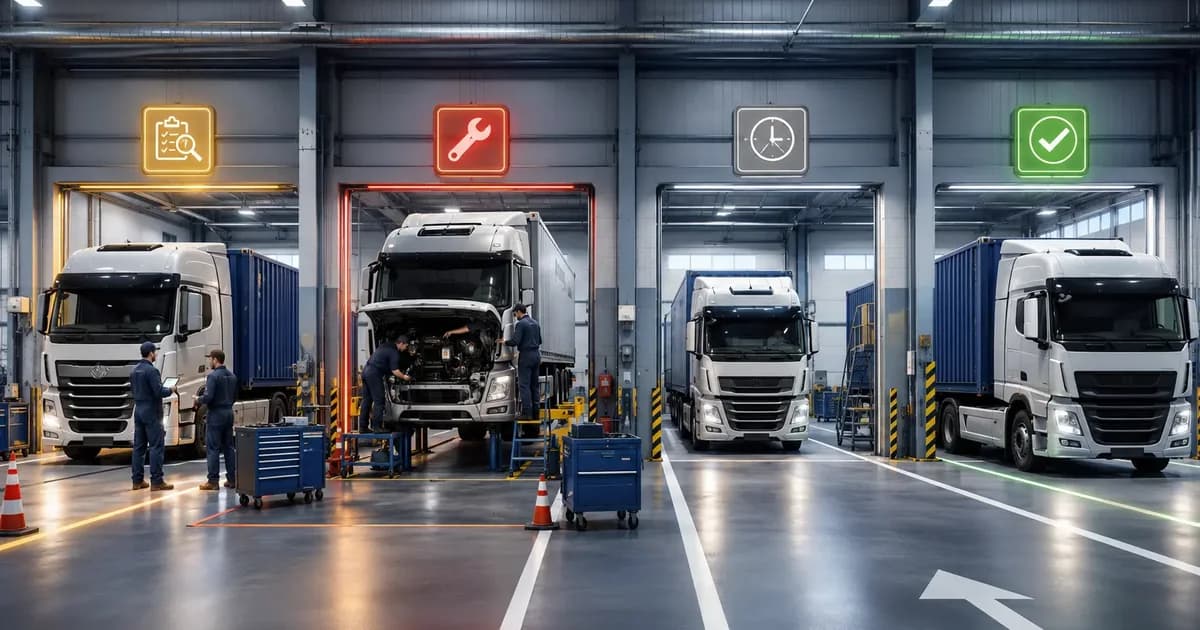
Garage workflow usually starts when a vehicle, trailer, or combination is created as an equipment record and tracked through usage, fault reporting, maintenance, and return to service.
The workflow should show whether each asset is active, faulty, inactive, under maintenance, or ready for allocation. This status helps the operations team avoid assigning equipment that cannot support the trip.
From Fault Report to Maintenance Action
A practical garage workflow often begins with a faulty report.
A driver, workshop user, or operations team member records the issue. The report should identify the vehicle or trailer, the reason for the fault, the date, the progress status, and any supporting remarks or documents.
After that, the workshop reviews the issue and decides whether the asset can continue operating, needs repair, or must be removed from planning. When maintenance is completed, the status should be updated so operations can use the asset again.
This workflow protects trip planning because the equipment status is no longer hidden in messages or separate files.
From Maintenance Record to Cost Visibility
Maintenance records also help management understand the real cost of fleet operations.
When repair and maintenance work is tracked against the asset, managers can see which vehicles create repeated issues, which trailers require attention, and where maintenance spending is increasing.
This gives the COO a clearer view of operational reliability. It also gives the CFO better context for transport cost, equipment cost, and job profitability.
What a Good Garage Management System Should Show
A good garage management system should show equipment identity, operating status, fault history, maintenance progress, cost records, and allocation readiness.
The system should support both daily planning and management review. It should help operations avoid unavailable equipment, help workshop teams close issues, and help accounting understand cost impact.
Key Data Teams Need to See
Operations teams need to see which vehicles and trailers are available for trips.
Workshop teams need to see faulty reports, maintenance tasks, repair progress, and clearance information.
Accounting teams need to see repair costs, maintenance costs, and any cost linked to transport jobs.
Managers need to see whether fleet condition is affecting service performance, waiting time, driver allocation, and equipment utilization.
In Apollogix TMS, garage-related control is supported through Equipment Management, Faulty Report, Maintenance, Operation, Accounting, Report, Dashboard, and Administration. This gives each department a clearer role in the same transport workflow.

How Apollogix Supports Garage Management for Logistics
Apollogix supports garage management for logistics by connecting equipment data with transport operation, workshop action, accounting records, and management reporting.
Apollogix TMS means Transportation Management System. It helps logistics teams manage transport jobs, operation planning, equipment, driver activity, accounting, reporting, and user permissions in one operating structure.
Equipment and Workshop Control in Apollogix
In Apollogix, teams can manage vehicles, trailers, and combinations with key information such as code, name, equipment type, sub type, operating status, registration details, and load-related data.
Faulty Report helps teams record equipment issues, track progress, add remarks, attach documents, and connect the issue to the correct vehicle or trailer.
Maintenance helps teams plan service work, review maintenance history, record cost, and track upcoming maintenance needs.
This structure allows the workshop team to update asset condition, operations to plan with better data, and managers to review transport performance with fewer blind spots.