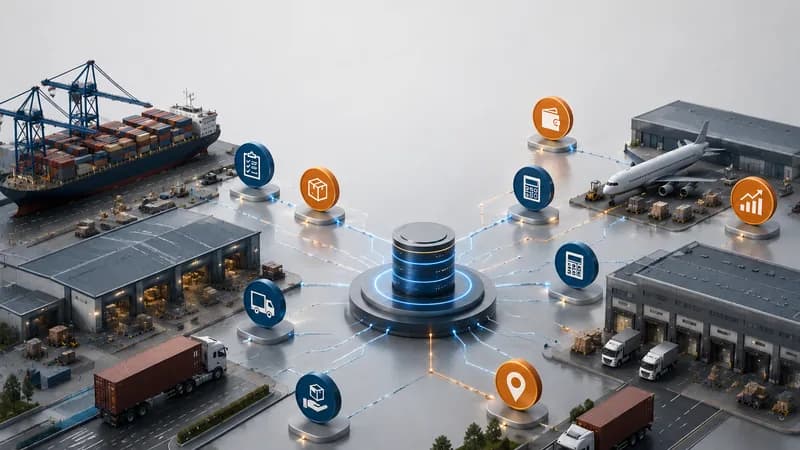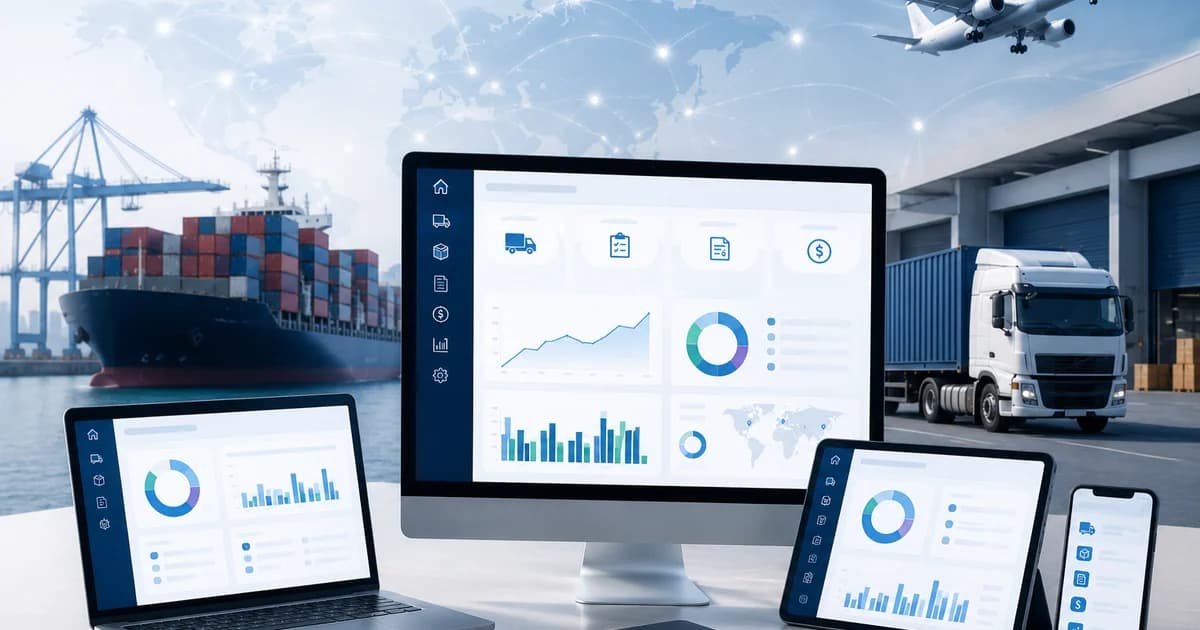
Modern logistics companies manage large volumes of operational and financial information every day. Shipment updates, transport orders, customer invoices, supplier costs, receivables, payables, and profitability reports are often handled by different teams using separate systems. While this approach may work for smaller organizations, it becomes increasingly difficult to maintain visibility and control as business operations grow.
Integrated accounting dashboard software provides a centralized environment where logistics and financial data are connected in real time. Instead of relying on multiple spreadsheets and disconnected reports, management teams gain a complete overview of operational performance and financial health from a single platform.
Why Logistics Companies Need an Integrated Accounting Dashboard
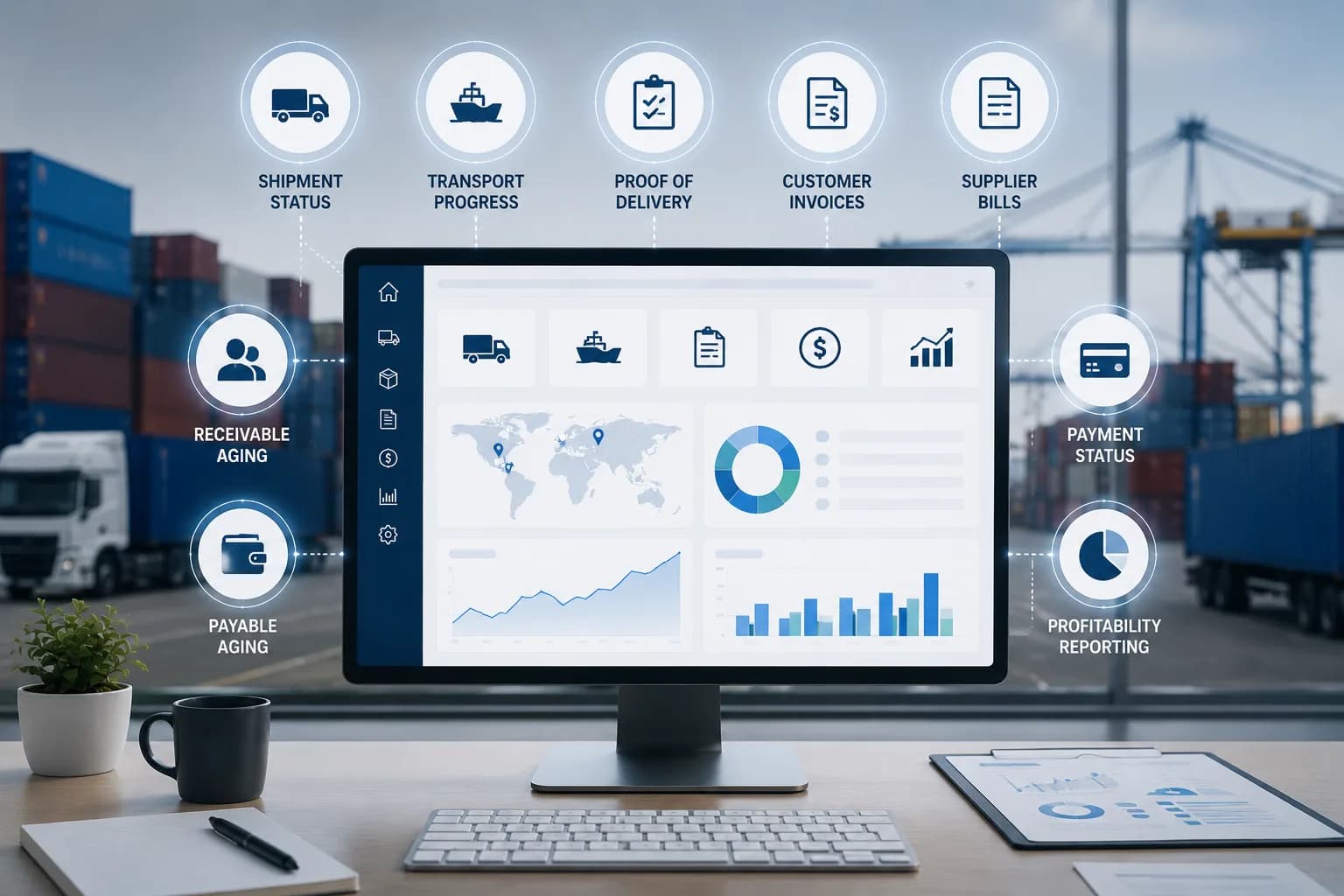
One of the biggest challenges in logistics management is the disconnect between operations and finance. Operations teams focus on moving shipments, managing deliveries, coordinating drivers, and resolving service issues. Finance teams focus on costs, billing, payments, and profitability. When information is not synchronized between these departments, delays and reporting inaccuracies become common.
For example, a shipment may be completed operationally but cannot be invoiced because supporting documents have not been uploaded. A job may appear profitable on an operational report while finance is still waiting for supplier costs. These situations create uncertainty and slow down decision-making.
An integrated accounting dashboard eliminates these blind spots by providing visibility into both operational status and financial readiness. Teams can quickly identify incomplete records, outstanding invoices, pending costs, and overdue payments without manually consolidating information from different sources.
Key Features of a Logistics Accounting Dashboard
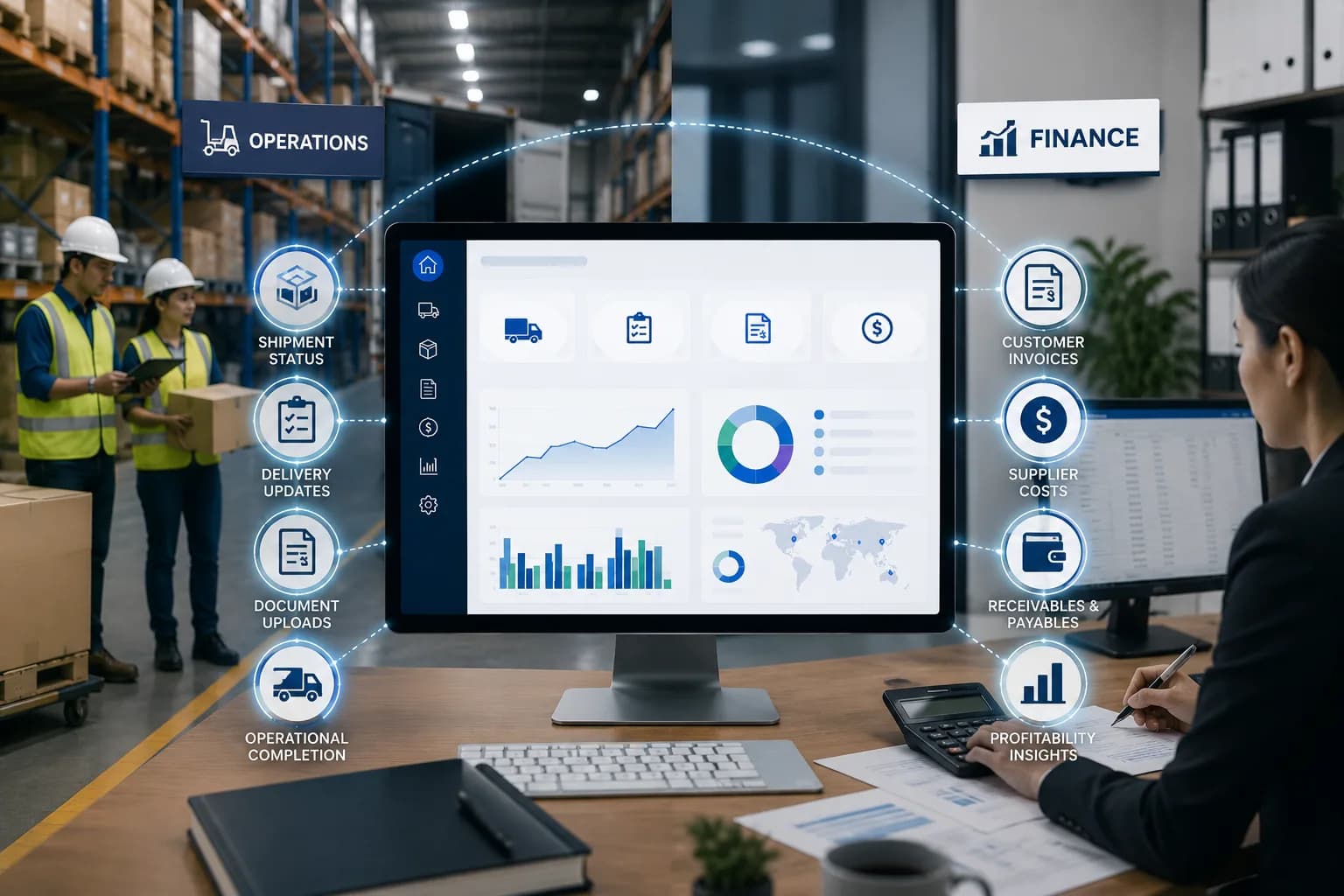
A modern logistics accounting dashboard should provide more than financial charts. It should connect operational activities directly to accounting records so management can understand the business context behind every number.
Key information typically includes shipment status, transport progress, proof of delivery, customer invoices, supplier bills, receivable aging, payable aging, payment status, and profitability reporting. When all these elements are displayed together, managers gain a clearer understanding of business performance.
Another important capability is profitability analysis. Instead of waiting until month-end, organizations can monitor profit margins continuously. Revenue and costs can be analyzed by customer, shipment, route, branch, service type, or business unit. This level of visibility helps companies identify operational inefficiencies and improve financial performance before problems become significant.
How Apollogix Connects Operations and Finance
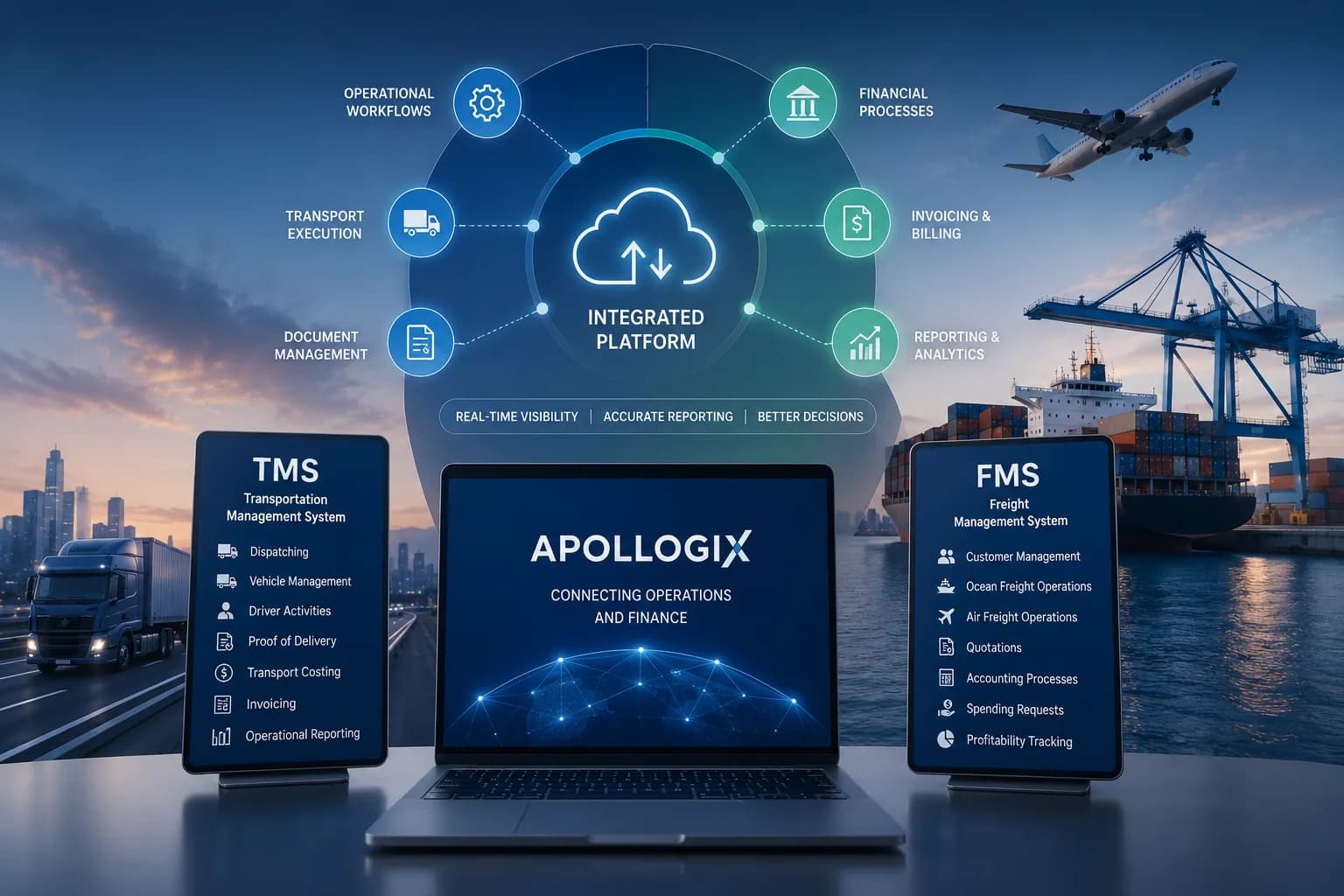
Apollogix provides integrated visibility through both its Transportation Management System (TMS) and Freight Management System (FMS). Operational workflows and financial processes are connected within a single platform, helping logistics organizations reduce manual work and improve reporting accuracy.
For transport companies, Apollogix TMS supports dispatching, vehicle management, driver activities, proof of delivery tracking, transport costing, invoicing, and operational reporting. Financial information can be reviewed alongside transport execution, allowing managers to monitor performance more effectively.
For freight forwarding businesses, Apollogix FMS supports customer management, ocean freight operations, air freight operations, quotations, accounting processes, spending requests, and profitability tracking. This integration allows businesses to manage both shipment execution and financial outcomes from the same system.
By connecting logistics and accounting data, Apollogix helps companies improve operational transparency, accelerate billing cycles, and strengthen financial control.
The Business Value of Connected Reporting
Integrated accounting dashboards are not simply reporting tools. They create a shared source of information for operations, finance, customer service, and management teams. When everyone works from the same dataset, collaboration improves and decision-making becomes faster.
Organizations can reduce manual reconciliation, minimize reporting delays, improve invoice accuracy, and gain better visibility into cash flow and profitability. Leaders no longer need to wait for month-end reports to understand business performance because critical information is available in real time.
As digital transformation continues to reshape the logistics industry, integrated accounting dashboards are becoming a fundamental requirement for businesses seeking greater operational efficiency, stronger financial management, and sustainable growth.