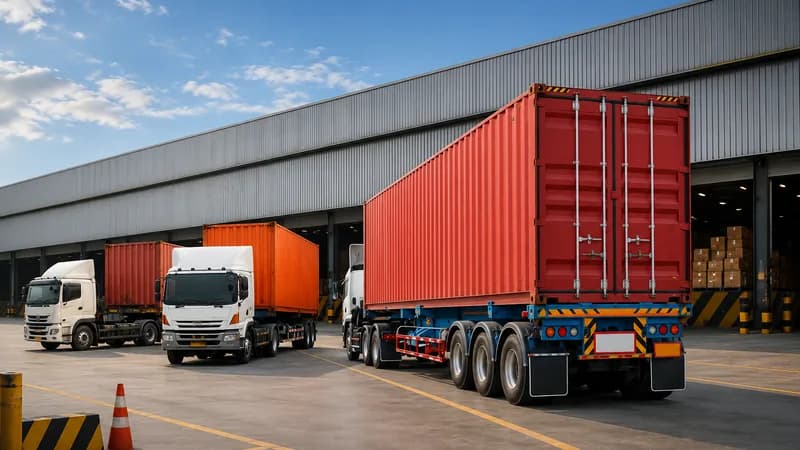
Delivery prediction is a critical capability in logistics operations. It determines how accurately a company can estimate when a shipment will arrive at its destination.
Without reliable prediction, businesses often miss delivery windows, fail to allocate resources properly, and struggle to maintain customer trust.
What Is a Delivery Prediction System?
A delivery prediction system is a tool that estimates expected delivery time using operational data, historical performance, and real-time conditions.
Key Inputs for Prediction
A typical system uses:
Historical delivery time data
Traffic and route conditions
Driver availability
Shipment volume and routing plan
Expected Output
The system provides estimated time of arrival (ETA) and updates it dynamically when conditions change.

Why Delivery Prediction Matters in Logistics
Accurate delivery prediction affects both operational planning and customer experience.
Problems Without Accurate Prediction
Missed delivery commitments
Poor route planning
Idle resources or overloaded capacity
Customer complaints due to uncertainty
Business Impact
Inaccurate prediction leads to penalties, re-delivery costs, and reduced customer retention. Based on industry benchmarks, improving ETA accuracy can increase on-time delivery rates by more than 15 percent.
How Delivery Prediction Works in Operations
Delivery prediction systems continuously calculate ETA based on real-time data updates.
Real-Time Adjustment
When traffic changes or delays occur, the system recalculates delivery time automatically.
Integration with Operations
Prediction data is used for:
Dispatch planning
Driver scheduling
Customer communication
Exception handling
Example Scenario
If a truck is delayed due to traffic, the system updates ETA and alerts the operations team to adjust schedules.

Which Businesses Need Delivery Prediction Systems
Delivery prediction is essential for logistics companies managing time-sensitive operations.
Last-Mile Delivery Companies
They need accurate ETA to meet customer expectations.
Transport and Trucking Companies
They use prediction to plan routes and reduce idle time.
Freight Forwarding Companies
They use ETA to coordinate shipments and communicate with customers.
Scaling Operations
As delivery volume increases, manual estimation becomes unreliable.
Key Takeaway
Delivery prediction systems estimate arrival time using real-time and historical data
Accurate ETA improves planning and reduces missed deliveries
Real-time updates allow teams to react to operational changes
Prediction data supports dispatch, scheduling, and communication
Growing logistics operations require automated prediction to maintain accuracy