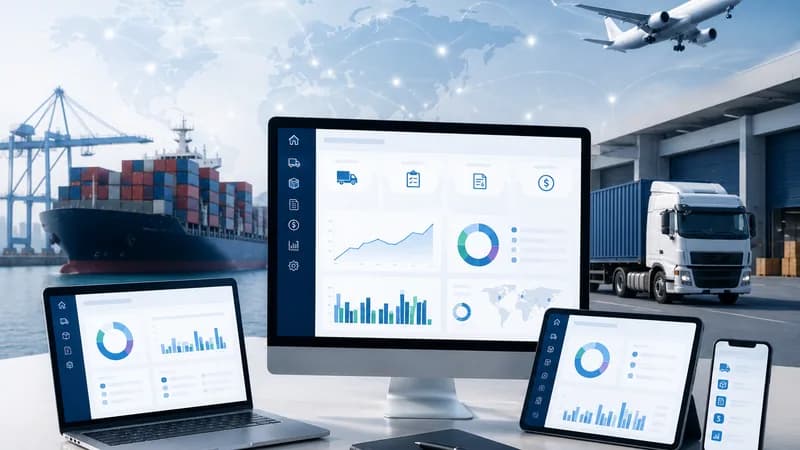
What Is a Logistics Solution for a Trucking Company?
A logistics solution for a trucking company is an integrated system that manages the complete transport operation—from customer orders and transport planning to dispatching, vehicle utilization, driver management, proof of delivery, accounting, and operational reporting.
Unlike traditional transport management that focuses only on dispatching trucks, modern logistics platforms connect every operational department into one workflow. Customer service receives transport requests. Dispatchers assign vehicles and drivers. Drivers update delivery progress through mobile applications. Finance monitors transport costs and invoicing. Management reviews operational performance through dashboards and reports.
As transportation volumes increase, managing operations through spreadsheets, phone calls, and disconnected software becomes increasingly difficult. Information is duplicated, manual coordination increases, and operational visibility decreases.
A connected logistics platform enables every department to access the same operational information throughout the transport lifecycle.
Simple definition
A trucking logistics solution connects transport planning, fleet operations, drivers, finance, and reporting into one centralized management platform.
Why Modern Trucking Companies Need Logistics Software
Transportation companies operate under constant pressure to deliver on time while controlling operational costs and maximizing fleet utilization.
Every transport job generates multiple operational activities. Orders must be confirmed. Vehicles must be assigned. Drivers require schedules. Delivery documents must be completed. Fuel, tolls, maintenance, and operational expenses need to be recorded. Customers expect real-time shipment updates.
When these activities are handled separately, operations become slower and more difficult to control.
Dispatchers may accidentally assign overlapping trips. Drivers may experience communication delays. Finance teams may wait for completed documents before issuing invoices. Managers often receive reports only after operational issues have already occurred.
As business expands, manual coordination limits operational efficiency and reduces visibility across the organization.
The operational challenge
The biggest challenge is coordinating transport operations, drivers, vehicles, costs, and customer information without creating disconnected workflows.
How Apollogix Supports Trucking Operations
Apollogix Transportation Management System (TMS) is designed specifically for transport companies that require centralized operational management.
The platform supports transport quotation management, transport order management, dispatch planning, trip execution, vehicle scheduling, driver management, proof of delivery (POD), GPS integration, container management, maintenance scheduling, fuel monitoring, accounting integration, dashboards, and operational reporting.
For businesses operating freight forwarding alongside transportation, Apollogix Freight Management System (FMS) extends operational capabilities by managing quotations, bookings, shipments, documentation, receivables, payables, profitability analysis, and financial reporting.
Because every department works from the same operational database, information flows automatically across sales, operations, accounting, and management without duplicated data entry.
Where the value appears
Operational value comes from connecting dispatching, fleet management, finance, customer service, and reporting into one continuous workflow.

Which Businesses Benefit Most?
Integrated trucking logistics solutions are suitable for transport companies, container carriers, distribution fleets, construction logistics operators, fuel transport companies, and third-party logistics providers (3PL).
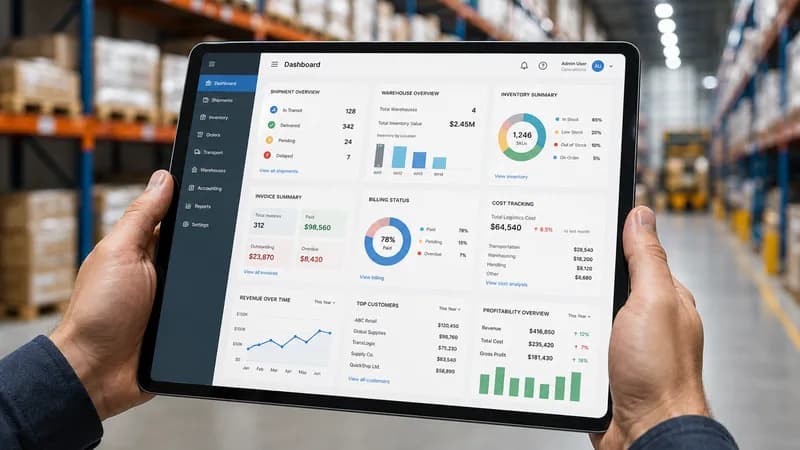
Dispatch teams gain greater visibility over daily transport execution. Fleet managers monitor driver utilization, vehicle availability, and maintenance schedules. Finance teams control transport costs and invoicing. Executives receive dashboards that display operational workload, fleet productivity, delivery performance, and business profitability.
As transport operations continue to become more complex, integrated logistics software provides the operational foundation required for sustainable business growth.