What Is Logistics in Business Operations?
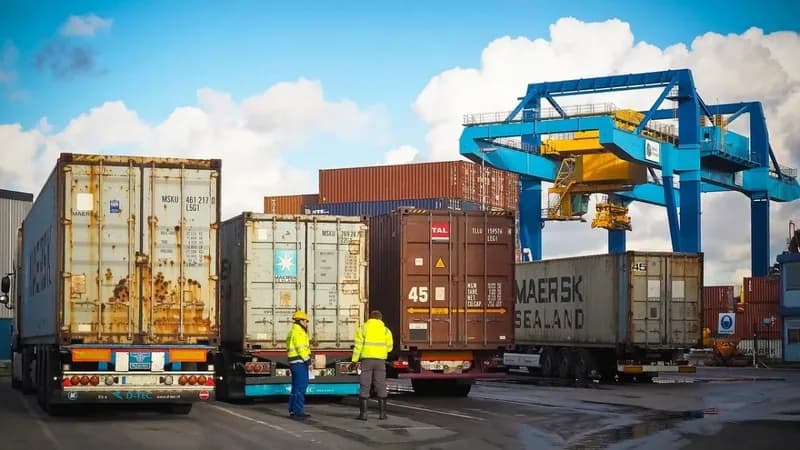
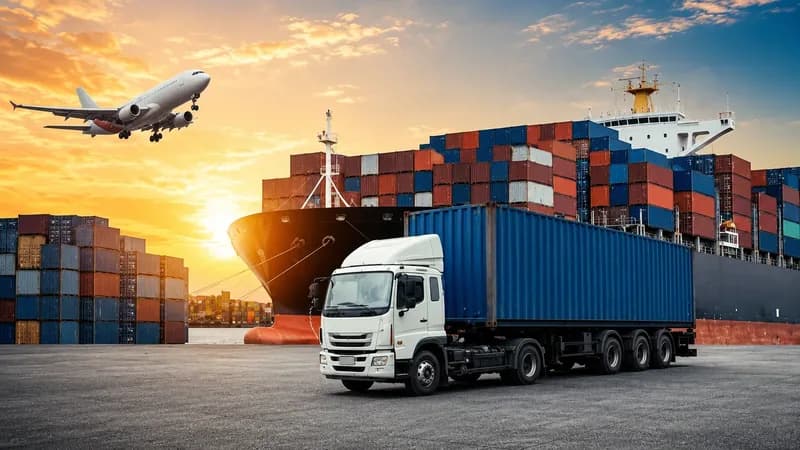
Logistics is the process of moving goods, documents, service tasks, cost data, and delivery information from one point to another.
In business operations, logistics does not only mean transportation. It includes shipment planning, transport job creation, booking, service handling, delivery tracking, document control, cost recording, invoice preparation, and reporting.
For freight forwarders and transport companies, logistics becomes difficult when each department works from a different source of information. Sales may have customer requirements. Operations may manage shipment or trip status. Accounting may track costs and invoices. Management may need reports to understand workload and margin.
When these records are disconnected, the company can lose visibility. A shipment may move without the latest customer update. A cost may be added but not billed. A transport job may be delayed before management sees the issue.
Simple definition
Logistics is the operating workflow that connects goods movement, service execution, cost control, and delivery visibility.

Why Logistics Control Matters
Logistics control matters because service quality, cost accuracy, customer updates, and job profit depend on the same operating data.
A logistics company may handle many shipments, containers, trips, vendors, customers, and service tasks at the same time. If the team manages this work manually, small gaps can become expensive. A missing delivery update can affect customer trust. A delayed trip can create extra cost. A service charge can be missed during invoicing. A job can look profitable until all actual costs are recorded.
Better logistics control gives each team a clearer role. Operations can manage shipment and transport progress. Sales can track customer scope. Accounting can check revenue, cost, receivables, and payables. Management can review job performance, shipment volume, and service workload.
This is why logistics is not only an operational topic. It is also a financial control topic for COO and CFO teams.
The business risk
The biggest risk is not only late delivery. The bigger risk is making decisions with incomplete logistics data.
How Apollogix Supports Logistics Workflows
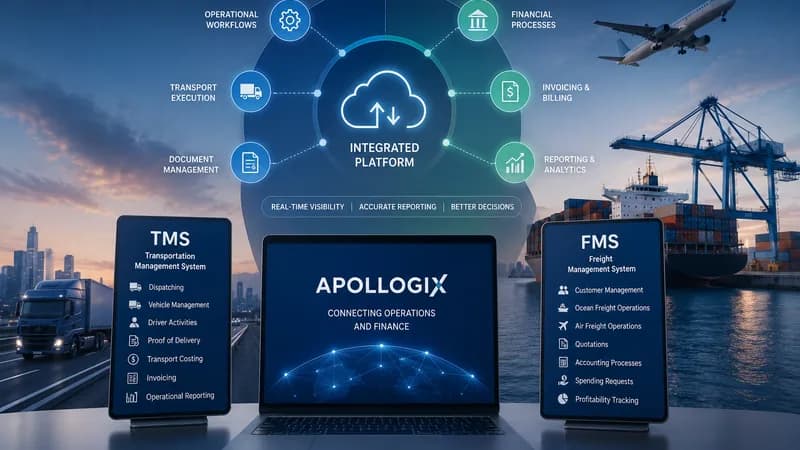
Apollogix supports logistics workflows by connecting transport, freight forwarding, service, accounting, dashboard, and reporting data in structured systems.
Apollogix TMS helps transport companies manage transport jobs, operation planning, trips, drivers, equipment, rate management, accounting, reports, and user permissions. It supports dashboard views for jobs, containers, trips, drivers, equipment, waiting time, trip summary, demurrage risk, and operational notifications.
Apollogix FMS helps freight forwarders manage customers, ocean freight, air freight, shipments, quotations, job orders, bookings, services, pricing, accounting, spend requests, reports, and role-based administration. It connects shipment data with service cost, job profit, invoice, account receivable, and account payable.
This structure helps teams reduce repeated data entry and makes the handover between departments clearer.
Where the value appears
The value appears when teams can see the same job, shipment, cost, invoice, and report data without rebuilding information at every step.
Which Companies Need Better Logistics Control?
Companies that manage many shipments, transport jobs, containers, service tasks, customer updates, invoices, and vendors need better logistics control.
The need becomes clear when managers cannot answer daily questions quickly. Which shipments are active? Which transport jobs are delayed? Which services are still open? Which costs are waiting for review? Which invoices are missing? Which customer updates have not been sent?
Freight forwarders need logistics control when quotation, booking, shipment, service, and accounting data must stay connected. Transport companies need it when job, trip, driver, equipment, cost, and invoice data must be reviewed together. 3PL companies need it when service execution, delivery status, and billing events involve several teams.
For COO teams, better logistics control reduces blind spots in daily operations. For CFO teams, it connects operational activity with revenue, cost, receivables, payables, and job profit.