What Is Redlane Software in Logistics?
Redlane software, in this content context, refers to a workflow or dashboard approach that helps logistics teams identify and manage priority cases, urgent shipments, delivery exceptions, and operational delays.
The keyword redlane software should not be treated as a confirmed Apollogix product name unless the business defines it that way internally. For this article, redlane software is used as a practical concept for managing redlane cases in logistics operations.
A redlane case may include a shipment that is delayed, a transport job waiting for action, a customs clearance issue, a missing document, a failed delivery attempt, a customer escalation, a cost exception, or any job that needs immediate attention from operations.
Why Redlane Cases Need a System
Redlane cases need a system because urgent logistics issues can be missed when teams work through chat messages, phone calls, spreadsheets, and separate reports.
A shipment may be waiting for documents. A driver may be delayed. A container may be held at port. A customer may need an urgent delivery update. A job may be creating waiting time or extra cost. If these cases are not clearly marked, the team may only notice them after the service issue has already affected the customer.
A redlane workflow helps teams separate normal jobs from urgent jobs that need action now.
Why Redlane Software Matters for Logistics Teams
Redlane software matters because logistics operations change quickly during the day.
A job that looked normal in the morning may become urgent by the afternoon. A delivery may miss its planned time. A customs document may be delayed. A driver may wait too long at a warehouse or port. A customer may request an immediate update. A finance team may need to know whether extra cost is being created.
Without a clear priority workflow, teams may spend more time asking “what happened?” than solving the issue.
Common Problems Without Redlane Visibility
The first problem is unclear priority. Teams may have many active shipments and transport jobs, but no simple way to see which cases need immediate attention.
The second problem is repeated follow-up. Customer service may ask operations, operations may ask dispatch, dispatch may call the driver, and management may wait for a manual update.
The third problem is late escalation. A delay, missing proof of delivery, customs issue, waiting time, demurrage risk, or billing issue may not be escalated early enough.
The fourth problem is cost exposure. If a redlane case creates waiting time, storage, detention, demurrage, extra trucking, or unplanned vendor cost, finance may only see the impact later.
The fifth problem is weak reporting. Management may not know which customers, routes, service types, teams, or vendors create repeated redlane cases.
What Management Needs to See
Management needs to see priority status, shipment reference, transport job, trip status, customer, responsible team, exception reason, waiting time, delivery impact, cost impact, customer update status, invoice readiness, and reporting exceptions.
This helps COOs control service execution and helps CFOs understand cost exposure, billing delay, and margin risk earlier.

What Should Redlane Software Cover?
Redlane software should cover priority tagging, shipment visibility, transport job status, exception tracking, customer updates, cost signals, invoice impact, dashboard alerts, and reporting.
The goal is not only to mark a case as urgent. The goal is to help the team understand why it is urgent, who owns the next action, and what impact it may create.
Priority Tagging and Case Status
Priority tagging helps the team identify which shipment, job, trip, document, or delivery case needs attention.
A case may be marked as redlane because it is delayed, blocked, missing a document, waiting for approval, waiting for customer action, waiting for release, or creating extra cost.
Clear status helps operations decide what to handle first.
Shipment and Transport Visibility
Shipment and transport visibility helps teams understand where the issue is happening.
For freight forwarding teams, this may include shipment status, booking status, service task, document follow-up, customs clearance status, job order, accounting status, and customer update.
For transport teams, this may include transport job, trip, driver, vehicle, container, trailer, waiting time, proof of delivery, equipment status, and trip summary.
Exception and Escalation Workflow
Exception and escalation workflow helps teams act before a delay becomes a customer complaint.
A useful redlane workflow should show exception reason, responsible team, next action, escalation owner, target resolution time, and customer communication status.
This helps the team avoid unclear responsibility.
Cost, Invoice, and Reporting Impact
Redlane cases often create financial impact.
Waiting time, extra service, document correction, transport rescheduling, storage, detention, demurrage, or missed billing items can affect margin. If these signals are not connected with job cost and invoice readiness, finance may review the issue too late.
A redlane dashboard should help management see both operational and financial impact.
How Apollogix Supports Redlane Workflow in Logistics
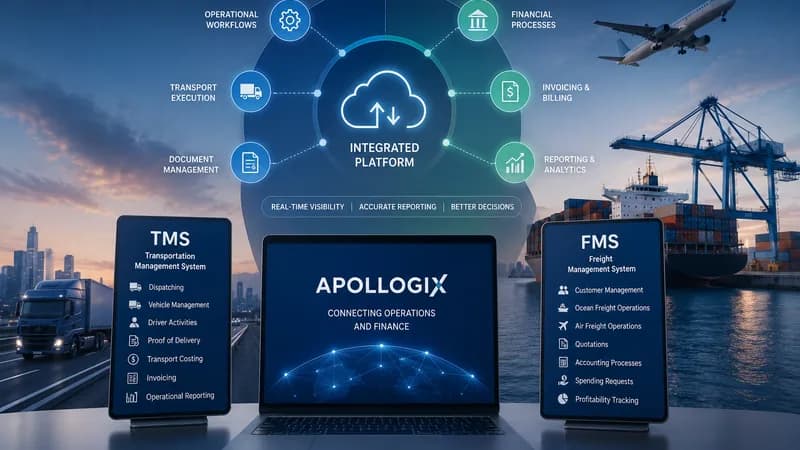
Apollogix supports redlane workflow by connecting shipment, transport job, service task, trip, driver, vehicle, waiting time, proof of delivery, accounting, notification, dashboard, and reporting through TMS and FMS.
TMS means Transportation Management System. Apollogix TMS helps transport companies manage transport jobs, operation planning, allocation, drivers, vehicles, trailers, containers, waiting time, proof of delivery, accounting, dashboard, and reports.
FMS means Freight Management System. Apollogix FMS helps freight forwarders manage shipment, ocean freight, air freight, service task, quotation, booking, job order, accounting, spend money request, notification, reporting, user permission, and system settings.
How This Helps Operations
Operations teams can use redlane workflow to identify urgent cases earlier.
Instead of checking multiple spreadsheets, chat messages, and manual reports, the team can review shipment status, trip status, service task, document follow-up, waiting time, proof of delivery, and pending action in a connected workflow.
This helps reduce missed updates and late escalation.
How This Helps Customer Service
Customer service terms can use redlane status to update customers faster and more clearly.
If a shipment is delayed, the team can see the reason. If a trip is waiting, the team can check the current status. If a document is missing, the team can request the right item. If proof of delivery is missing, the team can follow up before billing is delayed.
How This Helps CFOs and COOs
COOs can use redlane data to review service bottlenecks, delayed shipments, transport issues, customer escalations, and team workload.
CFOs can use redlane data to review cost exposure, unbilled charges, invoice readiness, receivables, payables, and margin signals.
When redlane cases are connected with operations and finance, management can act earlier and review root causes more clearly.

Which Businesses Need Redlane Software Most?
Businesses with many shipments, transport jobs, customers, documents, vehicles, invoices, and service commitments need redlane software most.
This includes freight forwarders, trucking companies, container transport companies, 3PL providers, import-export service providers, distributors, delivery fleets, and logistics teams inside manufacturers.
When the Need Becomes Clear
The need becomes clear when urgent cases are handled manually.
If customer service has to ask operations for every delay, operations has to ask dispatch for every trip issue, finance has to wait for proof of delivery or cost confirmation, and management only sees redlane cases in manual reports, the business already has visibility gaps.
A redlane workflow helps reduce these gaps by connecting operational, financial, and reporting data.
The Business Benefit
Redlane software helps logistics companies improve priority visibility, reduce repeated follow-up, manage exceptions earlier, update customers faster, and connect operations with finance.
It also helps management understand whether redlane cases are isolated incidents or repeated workflow problems.