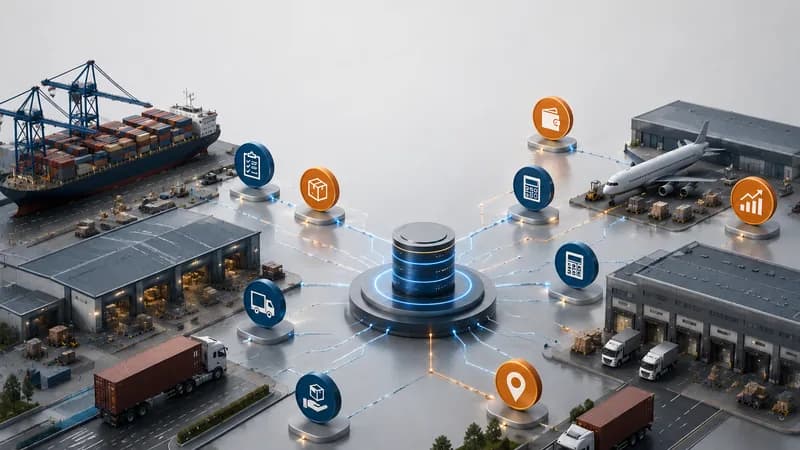
Dashboard software gives logistics managers a centralized view of operations — from shipments and job status to financial performance.
Without this visibility, teams rely on fragmented reports and manual tracking. This leads to delays, data inconsistencies, and slow decision-making.
What Is Dashboard Software in Logistics?
Dashboard software in logistics is a system that aggregates operational data into a single interface for monitoring and decision-making.
Core Data Displayed on a Dashboard
A typical dashboard includes:
Shipment status (import, export, domestic)
Job progress (draft, active, completed)
Financial indicators (revenue, cost)
Alerts and notifications
Real-Time Data Updates
The system updates continuously. Every operational change is reflected immediately.

Why Real-Time Visibility Matters
Real-time visibility is critical because logistics operations change constantly.
Common Problems Without Visibility
Delays detected too late
Costs identified after they occur
Teams spend time verifying data
Business Impact
These issues reduce efficiency and affect profitability. Based on industry benchmarks, visibility reduces delays by up to 20 percent.
How Dashboard Software Works in Operations
Dashboard software collects data from multiple modules and displays it visually.
Data Sources Integrated
Shipment operations
Transport jobs and trips
Accounting data
System notifications
Role-Based Dashboard Views
Each team sees relevant data:
Sales tracks revenue
Operations monitors shipments
Accounting reviews financial data
Example Use Case
Managers can instantly detect delayed shipments and review cost performance in one screen.
Which Businesses Need Dashboard Software
Dashboard software is most valuable for complex logistics operations.
Freight Forwarding Companies
They track shipment progress and profitability across teams.
Transport Companies
They monitor trips, drivers, and delivery timelines.
Multi-Branch Businesses
They maintain consistent data across locations.
Scaling Operations
As operations grow, dashboards help maintain control without increasing manual workload.
Key Takeaway
Dashboard software centralizes logistics data into one view
Real-time visibility enables early problem detection
Combining operational and financial data improves decisions
Role-based dashboards help teams focus on relevant data
Growing businesses rely on dashboards to maintain control