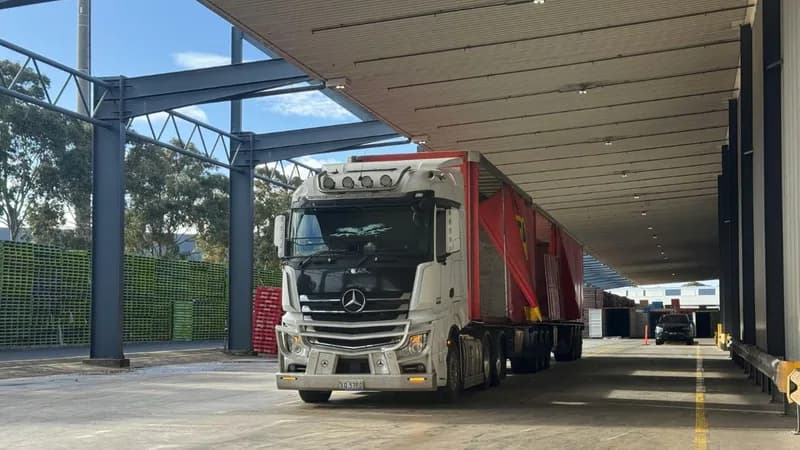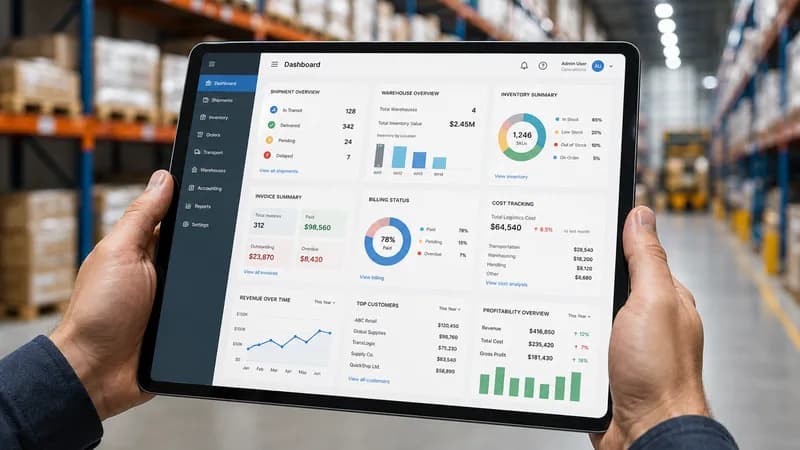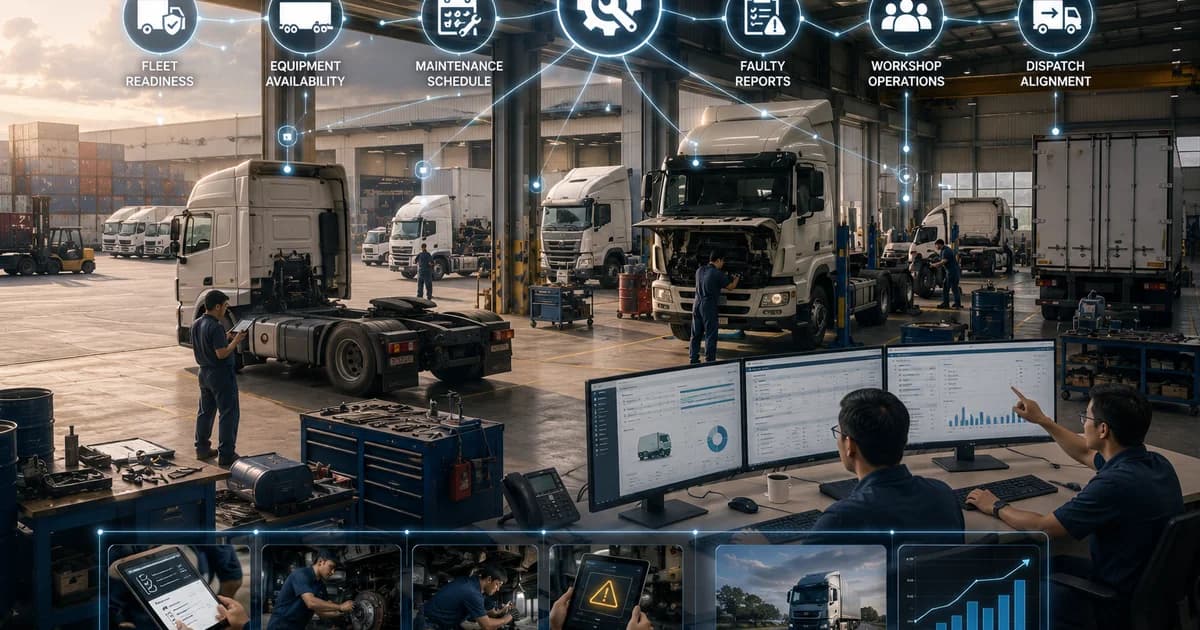
Garage Operations play an important role in logistics by helping transport companies manage fleet readiness, equipment conditions, maintenance activities, repair workflows, operational costs, and coordination between workshop teams and dispatch operations.
In logistics and transportation businesses, garage operations are not limited to vehicle repairs. They also involve monitoring vehicles, trailers, equipment availability, maintenance schedules, faulty reports, and operational status to ensure transport jobs can be executed without disruption.
A transport plan may be completed successfully on paper, but execution can still fail if a truck is under maintenance, a trailer has unresolved issues, or equipment status is not visible to dispatch teams. Effective Garage Operations help organizations maintain operational continuity and improve fleet utilization.
What Are Garage Operations?
Garage Operations refer to the processes used to manage vehicles, trailers, equipment, maintenance activities, repairs, and fleet readiness within a logistics organization.
The primary objective is to ensure that equipment remains available, safe, compliant, and ready for transport operations.
Fleet Operations and Equipment Readiness
Fleet Operations depend heavily on accurate information regarding vehicle and trailer availability.
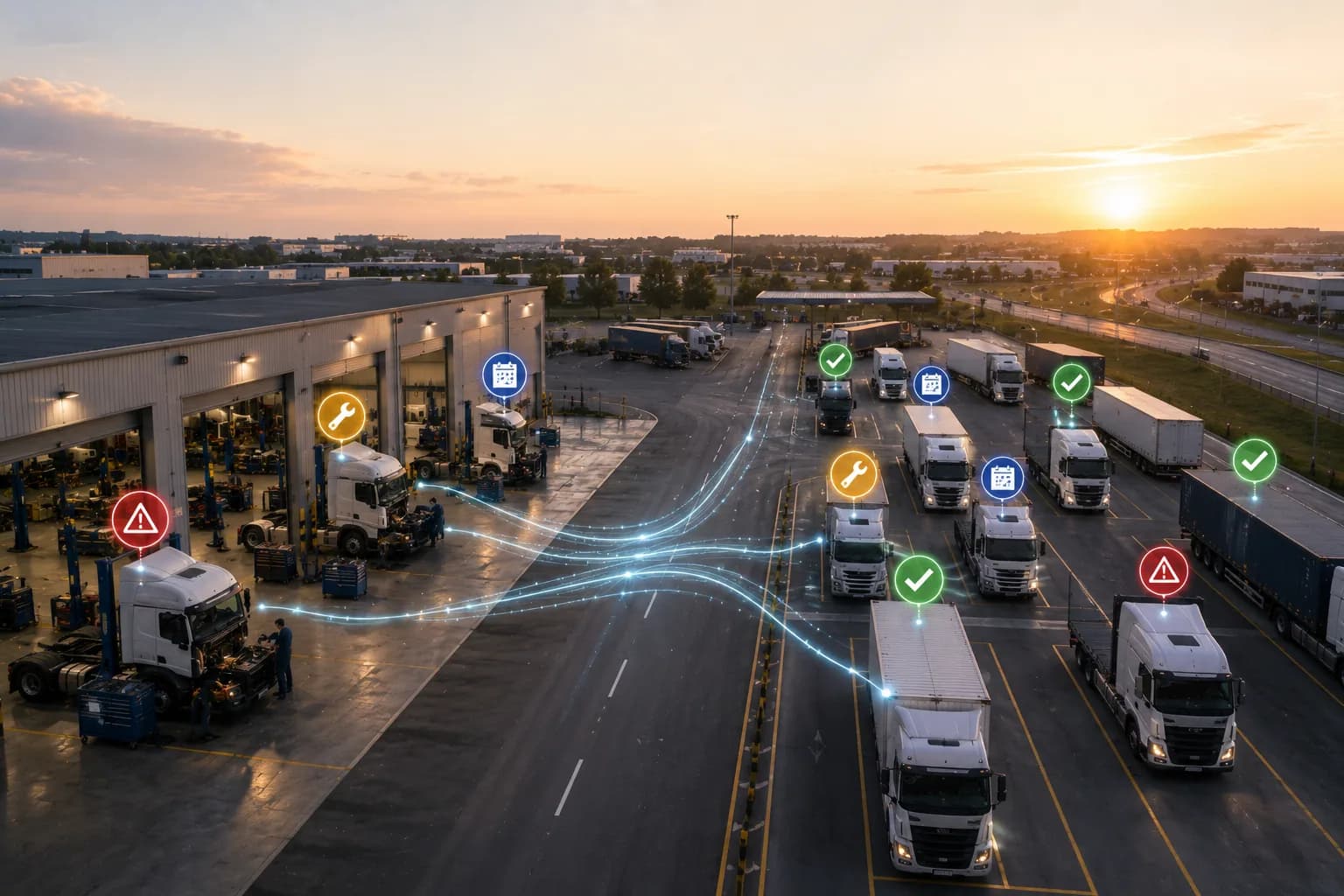
Garage teams must continuously monitor whether equipment is active, under maintenance, awaiting repair, or temporarily unavailable. This visibility allows transport planners to make informed decisions when assigning transport jobs.
Why Garage Operations Must Connect With Dispatch
Dispatch teams rely on accurate equipment information before assigning trips.
When maintenance updates are stored separately in spreadsheets, messages, or paper records, dispatchers may unknowingly allocate unavailable equipment. This can lead to delays, customer service issues, additional costs, and operational inefficiencies.
Why Are Garage Operations Important for Logistics Companies?
As fleet size increases, managing vehicles and equipment manually becomes increasingly difficult.
Garage Operations provide a structured approach to controlling maintenance activities, equipment availability, repair workflows, and operational readiness across the organization.
Reducing Operational Risks
Manual tracking methods often create information gaps between workshop teams and operations teams.
Without centralized visibility, companies may struggle to identify which vehicles are available, which repairs remain unresolved, and which equipment should not be assigned to active transport jobs.
Supporting Reliable Fleet Operations
Reliable Fleet Operations require reliable equipment.
Unexpected vehicle breakdowns or trailer issues can disrupt schedules, increase waiting times, and force dispatch teams to make last-minute adjustments.
Garage Operations help reduce these risks by improving visibility into equipment conditions and maintenance requirements.
Improving Maintenance Control
Maintenance activities generate direct and indirect costs, including repair expenses, downtime, replacement parts, and labor.
By maintaining accurate maintenance records, companies can analyze recurring issues, evaluate repair effectiveness, and improve long-term fleet performance.

What Information Should Garage Operations Track?
Garage Operations should maintain accurate records related to vehicles, trailers, equipment status, maintenance activities, repairs, costs, and operational readiness.
Equipment Management Records
Equipment Management requires detailed records for vehicles and trailers, including registration information, equipment type, ownership details, technical specifications, operating status, and usage history.
Centralized records help workshop teams, dispatchers, accountants, and managers work from the same source of information.
Faulty Reports
Faulty Reports allow organizations to document issues identified by drivers, operations personnel, or workshop teams.
Each report should include equipment details, issue descriptions, reporting dates, responsible personnel, repair status, and supporting documentation.
Maintenance Activities
Maintenance processes should include preventive maintenance schedules, inspections, repair activities, due dates, completion status, and maintenance history.
This information helps organizations plan maintenance workloads while minimizing operational disruptions.
Repair Progress and Cost Monitoring
Monitoring repair progress and maintenance costs provides visibility into fleet performance and operational efficiency.
Management teams can evaluate downtime, recurring failures, maintenance expenses, and equipment utilization using historical records.
How Do Garage Operations Support Dispatch?
Garage Operations support dispatch by providing real-time visibility into equipment availability and readiness before transport assignments are made.
Successful transport execution depends on alignment between drivers, vehicles, trailers, routes, schedules, and equipment conditions.
Equipment Visibility for Dispatch Teams
Dispatchers need immediate access to equipment status before assigning transport jobs.
Maintenance records, repair status, and open Faulty Reports should be visible to prevent allocation errors.
Driver Reports Improve Operational Awareness
Drivers are often the first individuals to identify equipment issues during daily operations.
Timely reporting helps workshop teams respond quickly and allows dispatch teams to adjust plans when necessary.
Workshop Updates Improve Decision-Making
Workshop personnel should continuously update repair progress and maintenance status.
These updates help dispatch teams understand when equipment will become available and allow management to monitor operational performance.
How Does Apollogix TMS Support Garage Operations?
Apollogix TMS supports Garage Operations through integrated workflows that connect Fleet Operations, Equipment Management, Maintenance, dispatch activities, accounting, dashboards, and reporting.
Equipment Management
Apollogix TMS provides centralized Equipment Management capabilities for vehicles, trailers, and equipment combinations.
This enables dispatch teams to view fleet availability and equipment status before assigning transport jobs.
Faulty Reports and Maintenance Management
The platform supports Faulty Reports, maintenance scheduling, repair tracking, and maintenance history management.
These capabilities help organizations improve equipment reliability and reduce operational disruptions.
Driver and Fleet Operations Workflows
Apollogix TMS connects drivers, dispatchers, and workshop teams through integrated operational workflows.
Organizations can track trip progress, issue reports, waiting times, proof of delivery, and operational exceptions from a single platform.
Accounting, Dashboards, and Reporting
Operational activities are connected directly with accounting and reporting functions.
Management teams can monitor fleet utilization, maintenance costs, operational performance, equipment availability, and transport activities through centralized dashboards and reports.
Garage Operations play an important role in logistics by helping transport companies manage fleet readiness, equipment conditions, maintenance activities, repair workflows, operational costs, and coordination between workshop teams and dispatch operations.
In logistics and transportation businesses, garage operations are not limited to vehicle repairs. They also involve monitoring vehicles, trailers, equipment availability, maintenance schedules, faulty reports, and operational status to ensure transport jobs can be executed without disruption.
A transport plan may be completed successfully on paper, but execution can still fail if a truck is under maintenance, a trailer has unresolved issues, or equipment status is not visible to dispatch teams. Effective Garage Operations help organizations maintain operational continuity and improve fleet utilization.