5 Signs Freight Forwarding SME Operation Needs FMS
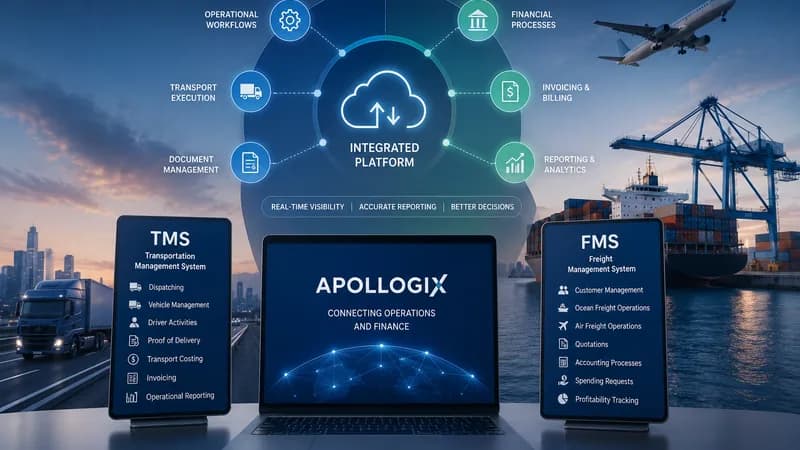
A freight forwarding SME can run smoothly when the shipment volume is small and the same people handle most updates. But as more customers, agents, services, invoices, and shipment types enter the workflow, the old way of working starts to show pressure. Sales may keep quotation details in one place. Operations may manage shipment status in another. Documentation may wait for bill details. Accounting may need cost data before issuing invoices. Management may only see the problem after a job is delayed or margin becomes unclear. FMS, or Freight Management Software, helps freight forwarding SMEs connect these workflows before daily coordination becomes too dependent on manual follow-up.
Sign 1: Shipment Information Is Spread Across Too Many Places
Shipment information becomes difficult to control when customer data, bill details, service updates, and accounting records are stored in different files or message threads.
Why scattered shipment data slows daily work
A freight forwarding job usually touches several teams before it is completed. Sales prepares the quotation. Operations creates or manages the shipment. Documentation handles house bill and master bill details. Service teams may add trucking, customs, handling, or other service items. Accounting needs invoice and cost data.
When these updates are separated, the team spends more time checking than executing. A customer may ask about shipment status, but operations needs to confirm with documentation. Accounting may see that a shipment is active, but still needs cost confirmation before issuing an invoice. Management may receive a report that does not match the latest job status.
FMS helps reduce this gap by keeping the shipment record connected with client, consol, job order, service, and accounting data. For ocean freight, the system can support details such as shipment number, consol number, HBL, MBL, carrier booking, vessel, voyage, POL, POD, and import or export status. For air freight, it can support MAWB, HAWB, airline, flight number, ETD, ETA, and related customer details.

Sign 2: Quotation and Job Order Handover Is Unclear
Quotation and job order handover becomes unclear when sales approval does not create a structured starting point for operations, documentation, and accounting.
The gap between selling and operating
In a freight forwarding SME, the business often starts from a quotation. Sales may prepare the offer based on customer, freight mode, import or export direction, incoterm, payment term, freight charges, and local charges. Once the customer accepts, the job should move into operations without losing the commercial context.
The problem begins when quotation details are not connected to the job order. Operations may know that a shipment needs to be handled, but may not have full visibility into agreed charges, service scope, customer details, or internal handover notes. Documentation may wait for missing bill information. Accounting may later need to confirm whether the invoice matches the approved quotation.
A structured FMS workflow helps turn accepted quotation or booking information into a job order. The job order can then connect with shipment, service, and accounting data. This gives each department a clearer view of what has been approved, what needs to be handled, and where the job stands in the operating flow.
Sign 3: Service Costs Are Added Late or Missed
Service costs become risky when customs, trucking, handling, and other charges are recorded after the job has already moved through several operating steps.
Why service data affects profit visibility
Freight forwarding profit depends on more than freight charges. A shipment may include customs service, trucking service, handling service, local charges, carrier costs, or other operating expenses. If these items are not attached to the correct job or shipment at the right time, the company may only discover the true cost after invoicing or after management review.
For SME freight forwarders, this creates daily pressure. Operations may know that an extra service was required, but accounting may not see it yet. Sales may expect one margin, while the actual job cost has changed. Management may see revenue, but not understand why the job profit is lower than expected.
FMS supports this process by allowing service items to be created under a job or shipment. Each service can include the work description, execution party, time, cost, and selling price. When service data is connected with accounting, the company can create invoices, track receivables and payables, and review job-level revenue and cost with fewer manual checks.

Sign 4: Accounting Waits Too Long for Operation Data
Accounting waits too long for operation data when invoices, receivables, payables, and job profit depend on updates that are not connected to the shipment workflow.
The finance impact of late operational updates
In freight forwarding, accounting cannot work accurately without operational data. The invoice may depend on the customer, shipment, service items, freight charges, local charges, and job status. Payables may depend on vendor costs, carrier charges, or service provider costs. If accounting receives this information late, the financial workflow becomes slower.
This delay affects more than internal administration. It can slow invoice issuance, make receivable tracking harder, and reduce management visibility into job-level profit. A job may look complete from an operations view, but still remain unfinished from a finance view because cost and invoice data are not ready.
FMS helps connect accounting with job, shipment, and service data. The system can support invoice creation from job, shipment, or service records. It can also support accounts receivable, accounts payable, customer or partner debt tracking, revenue and cost by job, and accounting data export for further processing. This helps accounting work from the same operating record instead of rebuilding the job from separate updates.
Sign 5: Management Reports Need Manual Consolidation
Management reports need manual consolidation when shipment volume, revenue, cost, customer performance, route performance, and profit cannot be reviewed from one operating structure.
Why reporting becomes harder as the SME grows
A freight forwarding SME may start with simple reporting. The team may track shipment count, customer revenue, or outstanding invoices through separate files. This can work for a period of time. But as the business handles more ocean freight, air freight, services, customers, and agents, manual reporting becomes harder to trust.
Management needs more than raw numbers. A COO needs to know whether shipment workload is increasing, which jobs are active, and where service follow-up is needed. A CFO needs to know whether cost, selling price, receivables, payables, and profit are recorded clearly. A management team needs to see shipment output by period, revenue by customer, profit by job or shipment, and the business mix between ocean and air.
FMS gives reporting a more reliable base because operational and financial data come from the same workflow. Reports can reflect shipment volume, customer performance, route performance, sales performance, job profit, and ocean or air structure without rebuilding every view manually.