What Does Delivery Prediction Mean for Businesses?
Delivery Prediction for Businesses means estimating delivery progress and delivery risk from connected logistics data.
In logistics operations, delivery prediction should not only mean guessing an exact arrival time. It should help teams understand whether a shipment, transport job, trip, or service task is moving as expected.
A delivery prediction view may use job status, shipment progress, trip activity, driver allocation, waiting time, proof of delivery, service status, notification, and report data to help teams review delivery risk earlier.
For businesses, the goal is practical. Teams need to know which deliveries are on track, which jobs may be delayed, which customers need an update, and which costs or billing records may be affected by a delivery issue.
Simple definition
Delivery Prediction helps businesses estimate delivery progress and delay risk from connected shipment, transport, service, POD, and report data.
Why Delivery Prediction Matters in Daily Operations
Delivery Prediction matters because delivery issues often affect more than one team.
A delayed delivery can create customer pressure. A late pickup can affect the next trip. Waiting time can create extra cost. A missing proof of delivery can delay billing. A service task that is not completed may slow down shipment closure. A management report may not reflect the latest delivery risk if data is updated manually.
When delivery data is scattered across calls, messages, spreadsheets, and separate systems, teams react late. Operations may know the trip status. Customer service may wait for an update. Accounting may not know whether an invoice is ready. Management may not see which deliveries are at risk until the issue has already affected the customer.
A clearer delivery prediction workflow helps teams prepare earlier and reduce repeated follow-up.
The business risk
The main risk is not only late delivery. The bigger risk is missing the early signals that affect customer updates, cost, billing, and service performance.

How Apollogix Supports Delivery Prediction Workflows
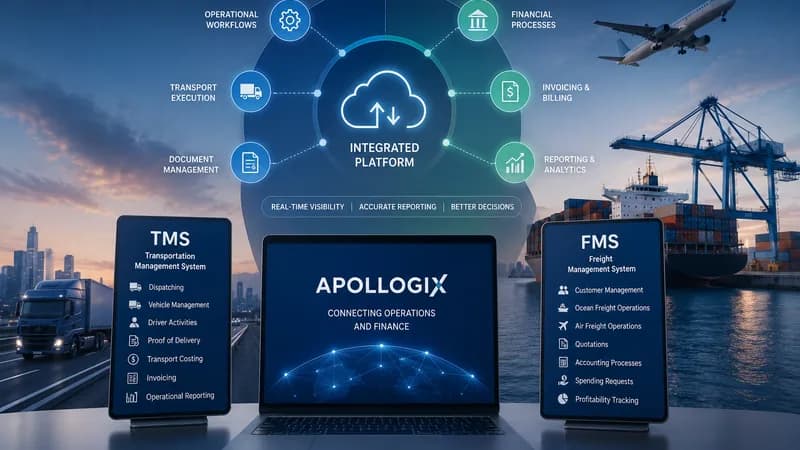
Apollogix supports delivery prediction workflows by connecting transport job, shipment, trip, service, proof of delivery, notification, dashboard, accounting, and report data.
In Apollogix TMS, Transport Job and Operation workflows help teams manage job status, schedules, driver allocation, trips, and progress tracking. Dashboard views help management review jobs, containers, trips, drivers, and equipment by status. Related workflows can support waiting time, trip summary, proof of delivery, demurrage risk, operational notifications, accounting, and reports.
In Apollogix FMS, Shipment, Job Order, Service, Notification, Accounting, Dashboard, and Report workflows help freight forwarding teams review shipment progress, service status, customer-related updates, cost impact, invoice status, and management reports.
This gives teams a stronger base for delivery prediction because delivery risk can be reviewed from connected operating data, not only from manual status checks.
Where the value appears
The value appears when delivery prediction connects job status, shipment progress, trip activity, service status, POD, notification, cost, and report data.
Which Businesses Need Delivery Prediction Most?
Businesses that manage many shipments, transport jobs, delivery commitments, drivers, service tasks, customer updates, invoices, and reports need delivery prediction most.
The need becomes clear when teams cannot answer delivery questions quickly. Which deliveries are on track? Which trips may be delayed? Which shipments need customer updates? Which POD records are missing? Which service tasks are not completed? Which delivery issues may affect cost or invoice status?
Transport companies need delivery prediction when trip status, driver allocation, waiting time, POD, and customer updates change throughout the day. Freight forwarders need it when shipment, service, transport, cost, and invoice data must stay connected. 3PL companies need it when delivery execution and billing events move across several teams.
For COO teams, delivery prediction reduces blind spots in service execution. For CFO teams, it connects delivery risk with cost, revenue, billing, receivables, payables, and job profit.