What Is Service-Oriented Architecture?
Service-Oriented Architecture, or SOA, is a software design approach where different business functions are structured as separate services that can work together through defined rules.
In simple terms, SOA helps a system avoid becoming one large block where every function depends on every other function. Instead, each service handles a clear business task. One service may handle customer data. Another may handle transport jobs. Another may handle shipment records, accounting records, reports, or user permissions.
For logistics companies, this concept matters because daily work is already divided into many workflows. Sales, Operations, Documentation, Accounting, Management, and Admin may all touch the same shipment or transport job, but each team works with different data.
Simple definition
SOA helps software organize business functions into separate services that can exchange data in a controlled way.

Why SOA Matters in Logistics Management
SOA matters in logistics management because logistics workflows often need to connect many functions without forcing every team to work inside one overloaded process.
A logistics company may need customer data for quotation. Quotation data may become a job order. A job order may connect with shipment, service, transport, accounting, and report data. Accounting may need cost and invoice records. Management may need a dashboard view. Admin may need to control user roles and permissions.
If the system is not structured well, small changes can become difficult. A change in pricing may affect quotation. A change in service status may affect accounting. A change in user permission may affect who can view or approve data. This is why system architecture is not only an IT topic. It affects daily operations.
The business risk
The risk is that disconnected systems create repeated data entry, unclear responsibility, and slower handover between teams.
How SOA Thinking Applies to TMS and FMS Workflows
SOA thinking applies to TMS and FMS workflows by encouraging each workflow to have a clear role while still connecting with related data.
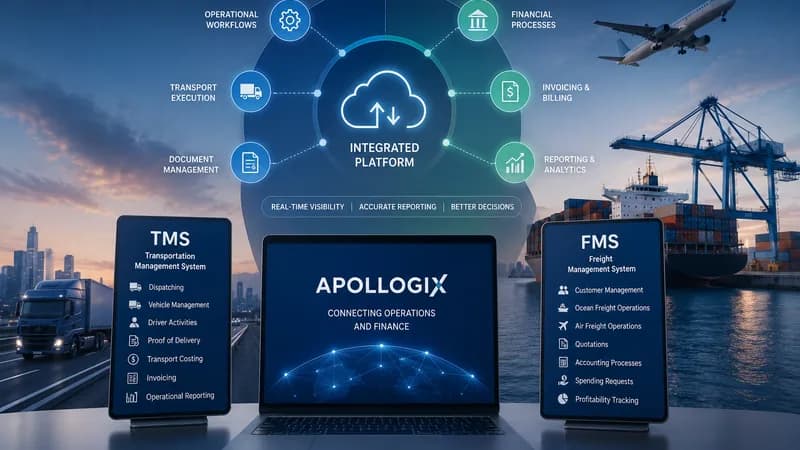
TMS means Transportation Management System. It helps transport companies manage transport jobs, operation planning, trips, drivers, equipment, rates, accounting, reports, administration, and system settings.
FMS means Freight Management System. It helps freight forwarding companies manage dashboard, client, ocean freight, air freight, service, sales, job order, pricing, accounting, spend money request, report, library, staff, system settings, administration, and help support.
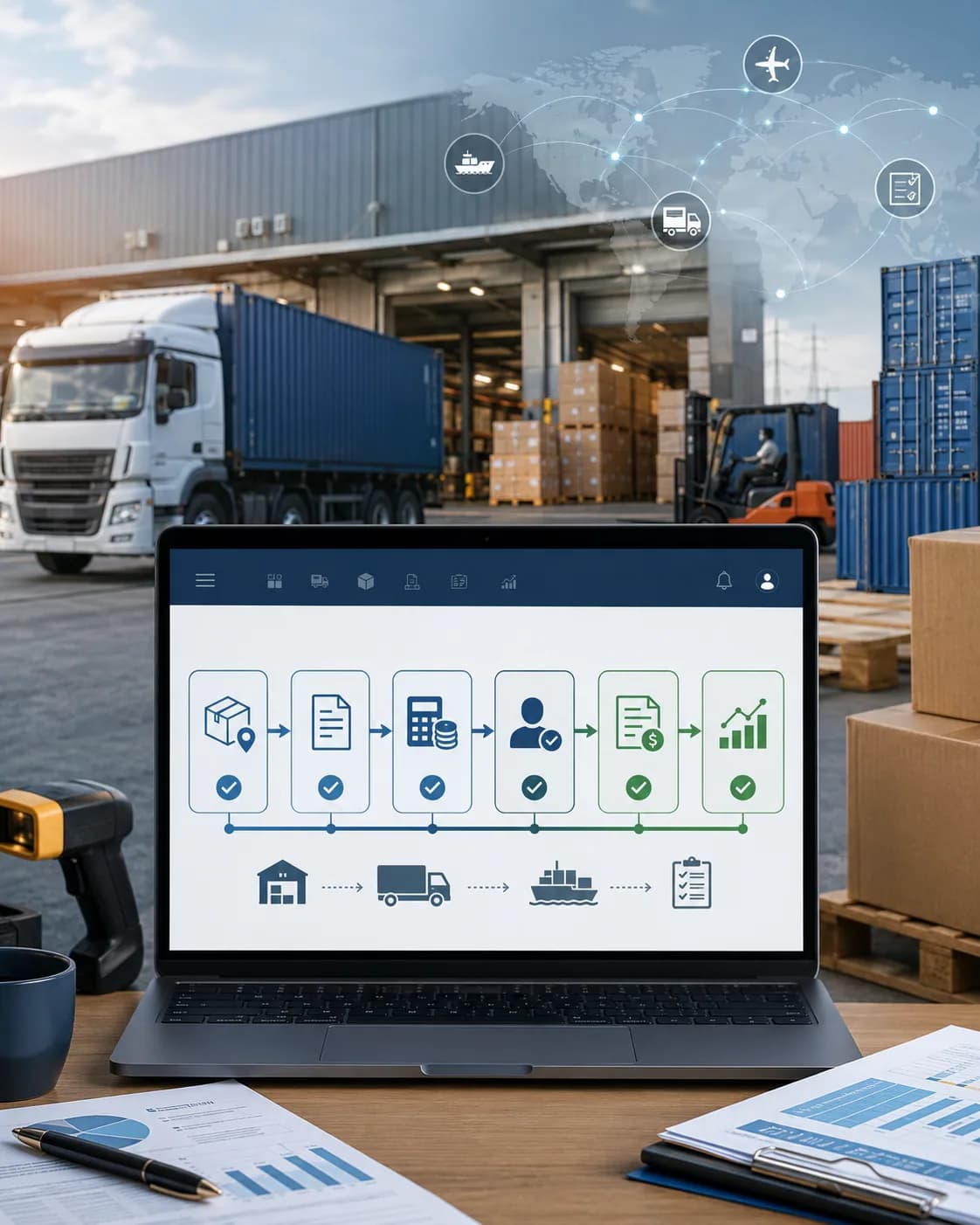
In practice, SOA thinking is useful when these workflows need to stay connected. Customer data should support quotation and job creation. Job data should connect with operation and accounting. Service data should connect with shipment and invoice records. Report data should reflect what happens in daily operations.
Where the value appears
The value appears when each workflow has a clear responsibility, but teams can still review connected job, shipment, service, cost, invoice, and report data.
Which Logistics Companies Should Understand SOA?
Logistics companies should understand SOA when they manage many systems, departments, workflows, user roles, and data handovers.
The need becomes clear when teams cannot answer system questions quickly. Where does customer data come from? Which workflow creates the job? Which service affects accounting? Which role can approve or edit data? Which report should management trust? Which process breaks when another process changes?
Freight forwarders should understand SOA when shipment, service, pricing, accounting, and report data must stay connected. Transport companies should understand it when jobs, trips, drivers, equipment, rates, accounting, and reports need to work together. 3PL companies should understand it when several teams use the same operational data for different decisions.
For CIO teams, SOA helps frame system design. For COO teams, it helps reduce workflow friction. For CFO teams, it helps protect the link between operations and financial records.